

What Happens During a Private Autism Assessment?
Not knowing what to expect can be one of the things that makes people hesitate before arranging an autism assessment. The word assessment can suggest something clinical and impersonal, or something you might somehow get wrong.
In practice, an autism assessment brings together information about you or your child, developmental history, discussion and structured activities. Together, these help our clinicians understand experiences, strengths and individual needs. Here is what you can expect at each stage of an assessment with AYC Psychology & Assessment Services:
Before you attend: building the picture
The assessment does not begin on the day of your appointment. It begins with information gathering which is an important part of helping us understand you or your child.
You will complete a detailed Developmental History Questionnaire, based on the Autism Diagnostic Interview-Revised (ADI-R), which asks about early development alongside current strengths and challenges. For adults, it can be helpful to involve someone who knew you during childhood, such as a parent, sibling or other relative, where possible. We understand that this isn’t possible for everyone.
We use the Sensory Processing Measure (SPM-2) to explore sensory experiences and how these may affect everyday life. This information is reviewed as part of the multidisciplinary assessment and helps inform the overall clinical picture and recommendations.
The Developmental History Questionnaire is reviewed by a member of our multidisciplinary team, who may contact you by phone or video call if further information is needed. For children, we also request information from school to help us understand how your child presents in different settings.
On the day: arriving at the clinic
Our clinic is at Dallam Court in Warrington, a five-minute walk from Warrington Central station.
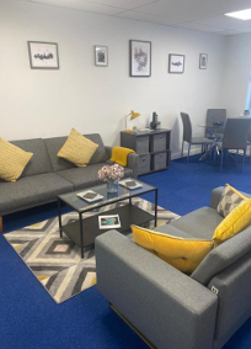
Our assessment spaces are designed to feel calm and welcoming and are generally very quiet. We have adjustable lighting, and fidget tools and sensory aids are available if helpful. If there is anything that would help you or your child feel more comfortable during the assessment, please let us know beforehand and we will do our best to accommodate this.
We know that visiting somewhere new can sometimes feel daunting, so we are also happy to send photographs of the building and clinic space in advance if this would be helpful.
The ADOS-2: what it actually involves
As part of the appointment, we use the Autism Diagnostic Observation Schedule, Second Edition (ADOS-2), a recognised, standardised assessment tool that helps us explore communication and social interaction. It is led by an appropriately trained clinician with another member of the multidisciplinary team present. The ADOS-2 is one part of the wider assessment.
Despite its formal-sounding name, the ADOS-2 is conversational and activity-based. Depending on age and individual needs, it may involve talking about pictures or everyday experiences, completing activities or simply having a structured conversation. For younger children, much of it can feel like play.
There are no right or wrong answers and no particular way you or your child is expected to behave. The activities simply give our clinicians opportunities to understand individual communication and interaction styles, alongside strengths, interests and experiences.
We aim to make the appointment feel relaxed and low-pressure, and you can ask questions or take a break if you need to.
At the end of the assessment: considering the outcome
Where the clinical team can reach a clear diagnostic decision after the assessment and consideration of the information gathered, we may be able to discuss the outcome with you on the day. Where further information or multidisciplinary discussion is needed, we will explain this and contact you once it has taken place.
The clinicians consider the information gathered from each part of the assessment together before confirming the diagnostic decision.
Taking a little more time does not suggest any particular outcome. It means we need to consider the information carefully before reaching a decision.
Feedback and your report
We will discuss the outcome with you, whether on the day or afterwards, and provide a comprehensive written report, usually within four to six weeks after the assessment.
The report includes a summary of the findings, whether the DSM-5 diagnostic criteria for autism are met, and personalised recommendations for home, education, work and daily life. It can be shared with schools, healthcare professionals, employers, universities or other organisations as you choose.
If the criteria are not met, that outcome is explained just as carefully, along with what we did observe and what might help. An assessment that does not result in a diagnosis is not a wasted assessment; understanding is still the goal.
A note on masking
Some people worry that they or their child may present differently during the assessment than they do at home or in other settings. This can be particularly relevant for people who have learned to mask or adapt their behaviour in different situations.
Our clinicians understand that autism does not always present in an obvious or stereotypical way. This is one of the reasons we build a wider picture through developmental history, sensory information and, for children, information from school, alongside the face-to-face assessment. We consider all of this information together rather than relying on how someone presents during one appointment.
Thinking about an assessment
If you are considering an assessment, you can get in touch with our team for more information. We can provide details about the assessment process and answer any questions you may have. If you would find it helpful to talk things through, we are also happy to arrange a call.
When you are ready to proceed, simply complete our booking form and our team will guide you through the next steps.
You can reach our team on 01925 249228 or enquire through our website.
