

How Long Does a Private Autism Assessment Take?
If you are considering an autism assessment, whether for yourself or for your child, one of the first questions is usually a practical one: how long will this actually take?
It is a fair question, and an important one. Many people come to us after a long period of wondering, and some have already spent time on an NHS waiting list. Knowing what to expect and roughly when it will happen, makes the process feel manageable rather than open-ended.
This guide explains each stage of a private autism assessment at AYC Psychology & Assessment Services, how long each part usually takes, and what happens behind the scenes.
The short answer
Appointments are usually available within approximately four to eight weeks of booking, subject to availability. The comprehensive written report is usually provided within four to six weeks after the assessment. From initial enquiry to final report, the process may therefore take around two to three months, although this varies.
The timing also depends on appointment availability and when the information needed for the assessment is returned. We will explain the next steps and expected timescales when you enquire.
Stage one: getting in touch and booking
The process begins when you get in touch with our team. We will provide information about the assessment, including our FAQs and potential timescales so that you can understand what is involved and decide whether you would like to proceed.
If you are unsure which type of assessment may be most appropriate, have questions about the process or would simply prefer to talk things through before deciding, we are very happy to arrange a telephone call with you. There is no requirement to have a call before booking.
When you are ready to proceed, we will ask you to complete our booking form. We will then send an invoice and arrange an appointment; payment confirms the booking. We send the developmental history and other questionnaires as part of the preparation.
Stage two: the Developmental History Questionnaire
Once your assessment is booked, we send you a Developmental History Questionnaire, which is based on the Autism Diagnostic Interview-Revised (ADI-R), along with other questionnaires.
This is the stage that varies most between people, and it is worth taking your time over. The questionnaire asks about early development as well as current strengths and challenges, and for many adults this involves thinking back, or talking to a parent, partner or sibling who can help fill in gaps.
The questionnaire is reviewed by a member of our multidisciplinary team, who may contact you by phone or video call if further information is needed. For children, we also request information from school to understand how your child presents in different settings. This helps the team build a fuller picture. School responses can affect when the report can be completed, so it is helpful to let school know about the request.
Stage three: the face-to-face assessment
The assessment appointment itself takes place at our Warrington clinic and can take up to 2 hours.
The face-to-face appointment includes the Autism Diagnostic Observation Schedule, Second Edition (ADOS-2), led by an appropriately trained clinician with another member of the multidisciplinary team present. This structured, activity-based part of the assessment helps us understand communication and interaction. It is considered alongside developmental history, sensory information, clinical information and, for children, information from school where available.
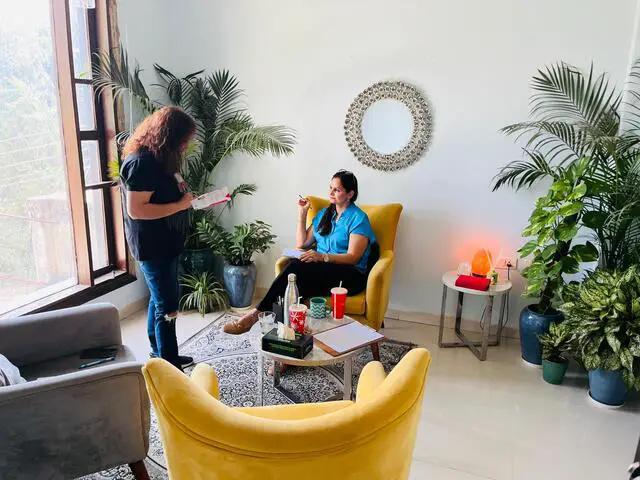
Our clinic spaces are deliberately calm and sensory-aware, with adjustable lighting, sensory aids and a selection of drinks available. Most people tell us the appointment feels far more relaxed than they expected.
At the end of the assessment: considering the outcome
Where the clinical team can reach a clear diagnostic decision after the assessment and consideration of the information gathered, we may be able to discuss the outcome with you on the day. Where further information or multidisciplinary discussion is needed, we will explain this and contact you once it has taken place.
The clinicians consider the information gathered from each part of the assessment together before confirming the diagnostic decision.
Taking a little more time does not suggest any particular outcome. It means we need to consider the information carefully before reaching a decision.
Feedback and your report
We will discuss the outcome with you, whether on the day or afterwards, and provide a comprehensive written report, usually within four to six weeks after the assessment.
The report sets out the assessment findings, whether the DSM-5 diagnostic criteria for autism are met, and contains personalised recommendations for home, education, work and everyday life. It can be shared with schools, healthcare professionals, employers, universities or other organisations, and is regularly used to support requests for reasonable adjustments and support.
What affects the timeline
The timing can be affected by appointment availability and how quickly the questionnaires and, for children, school information are returned. Please return the questionnaires at least five working days before the assessment so the clinicians have time to review them.
Each assessment is carried out in line with relevant NICE guidance and recognised diagnostic standards, with the different sources of information considered by the multidisciplinary team.
Taking the next step
If you are considering an assessment, you can get in touch with our team for more information. We will provide details about the assessment process and answer any questions you may have. If you would find it helpful to talk things through, we are also happy to arrange a call.
When you are ready to proceed, simply complete our booking form and our team will guide you through the next steps.
You can reach our team on 01925 249228 or enquire through our website.

